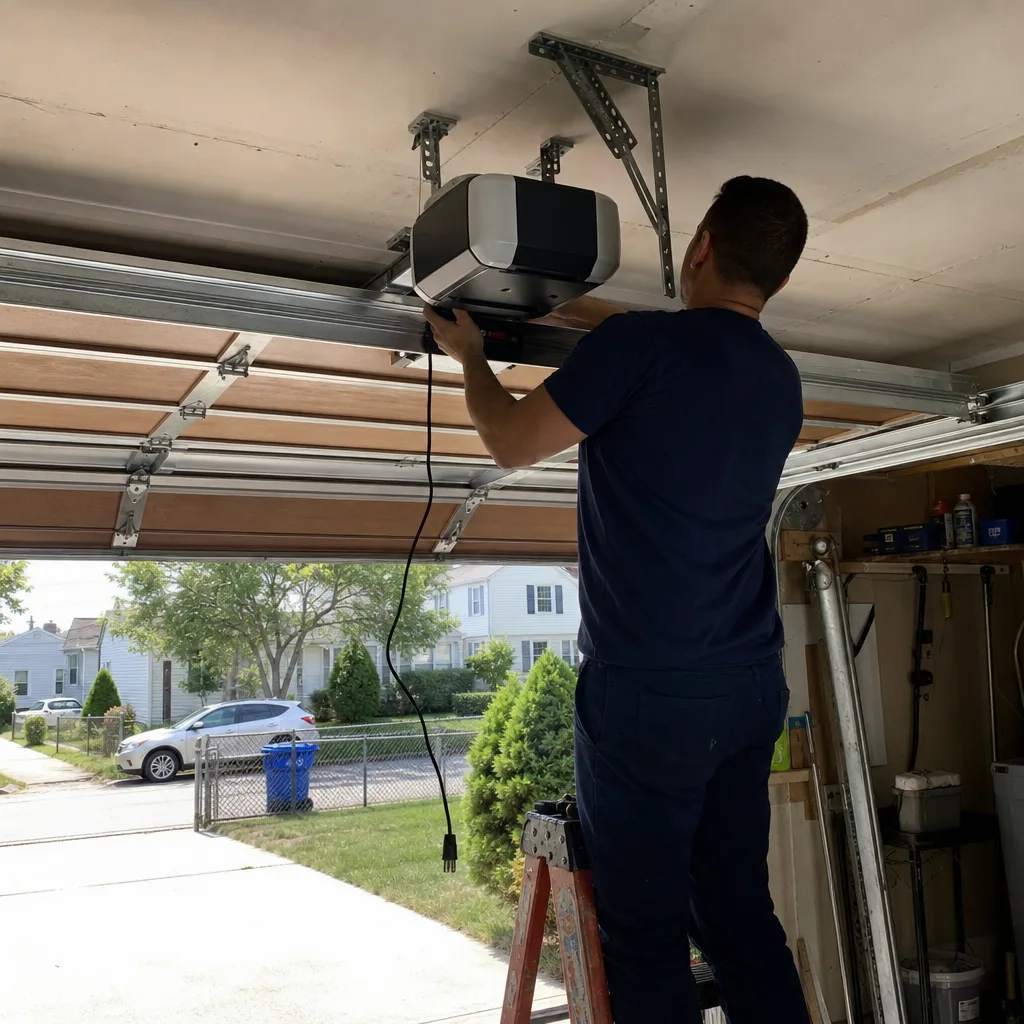
Last updated November 20, 2026
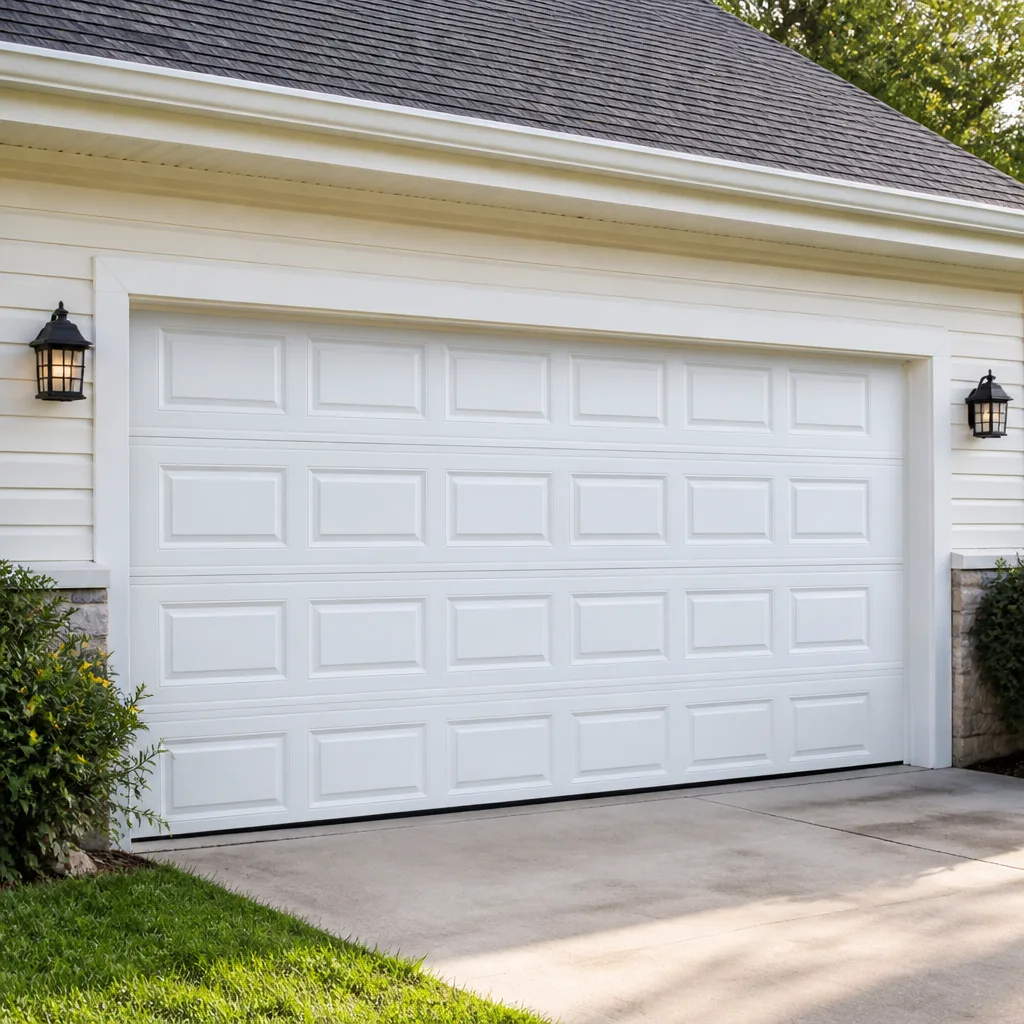 Raised-panel steel
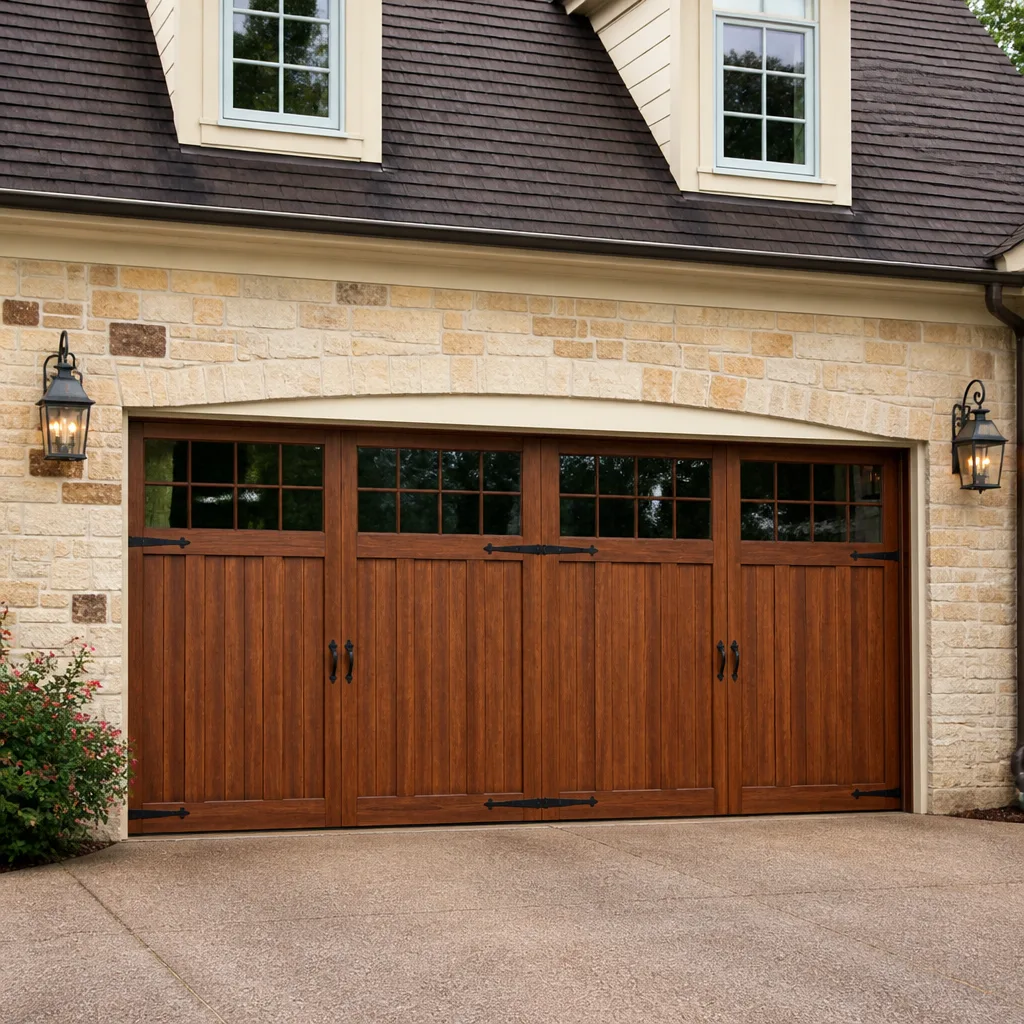 Carriage house
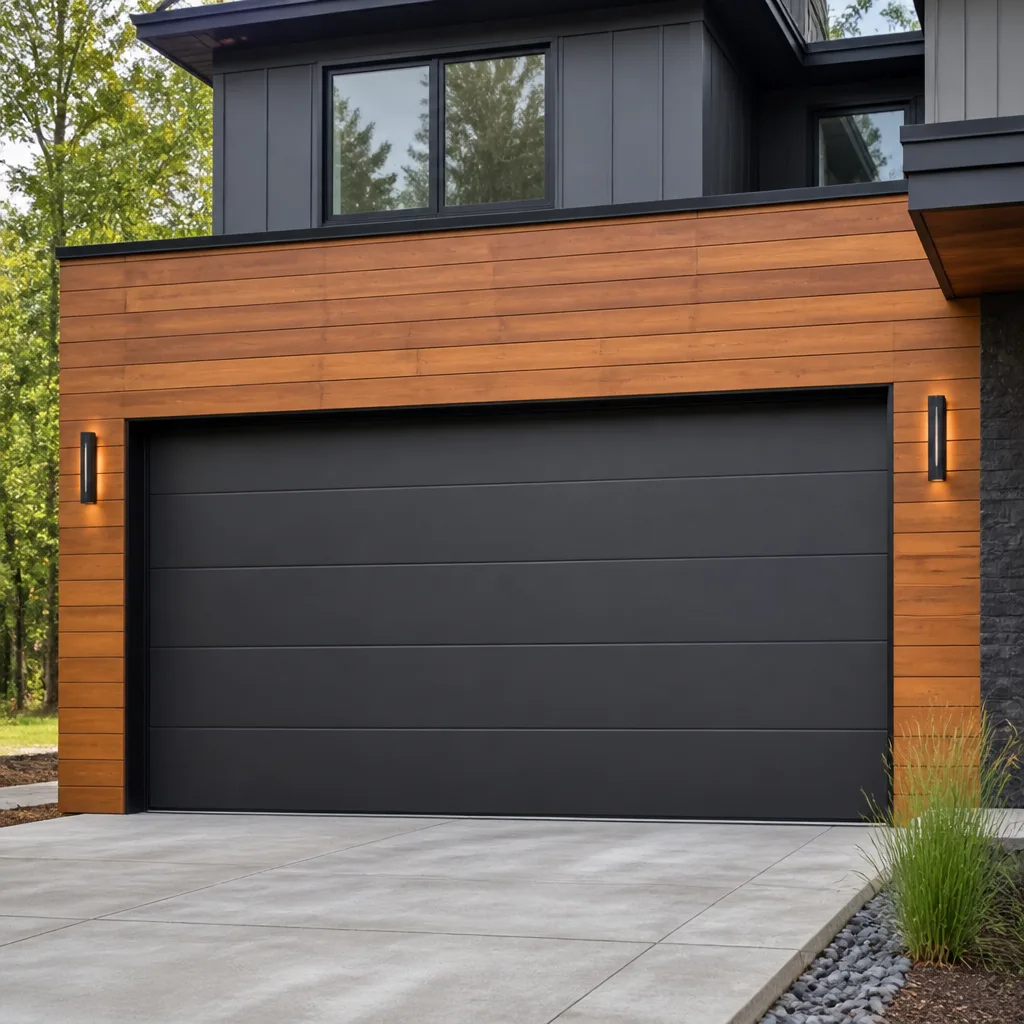 Modern flush
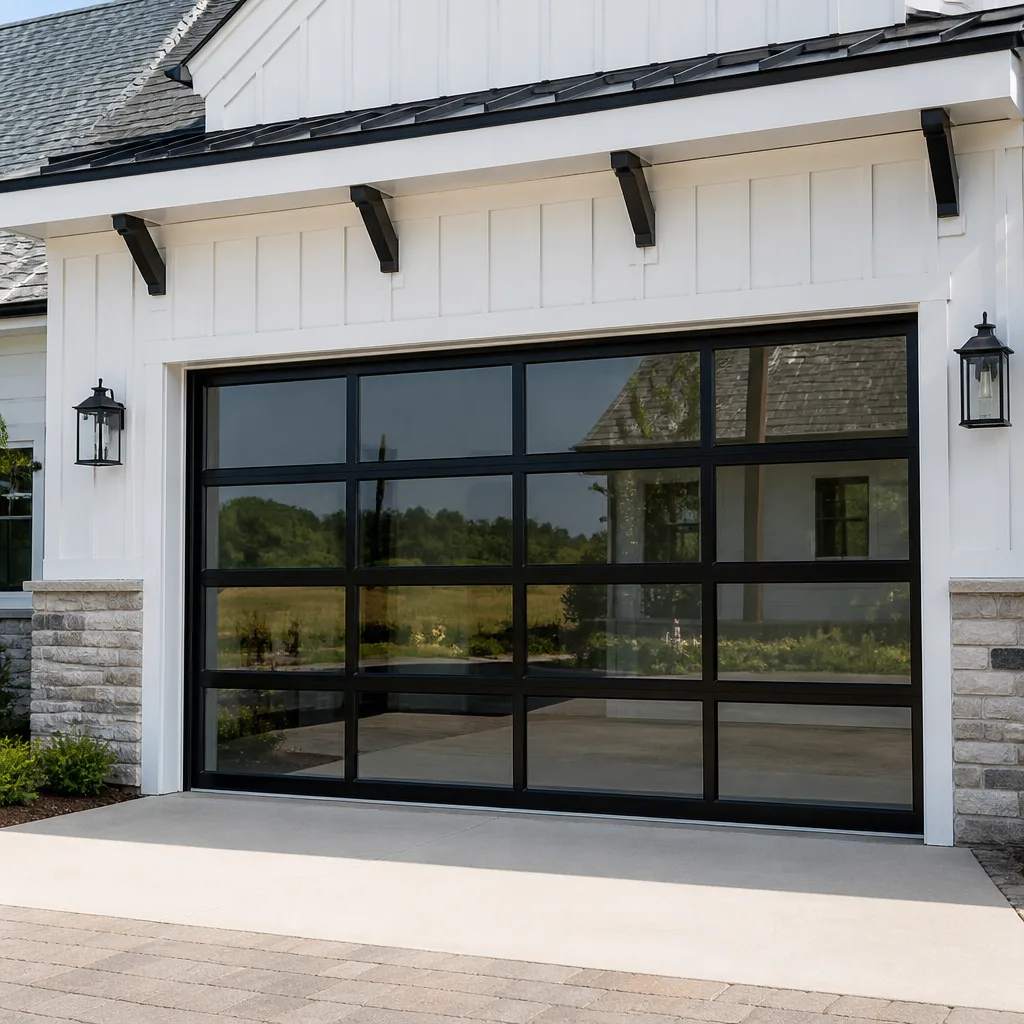 Full-view glass
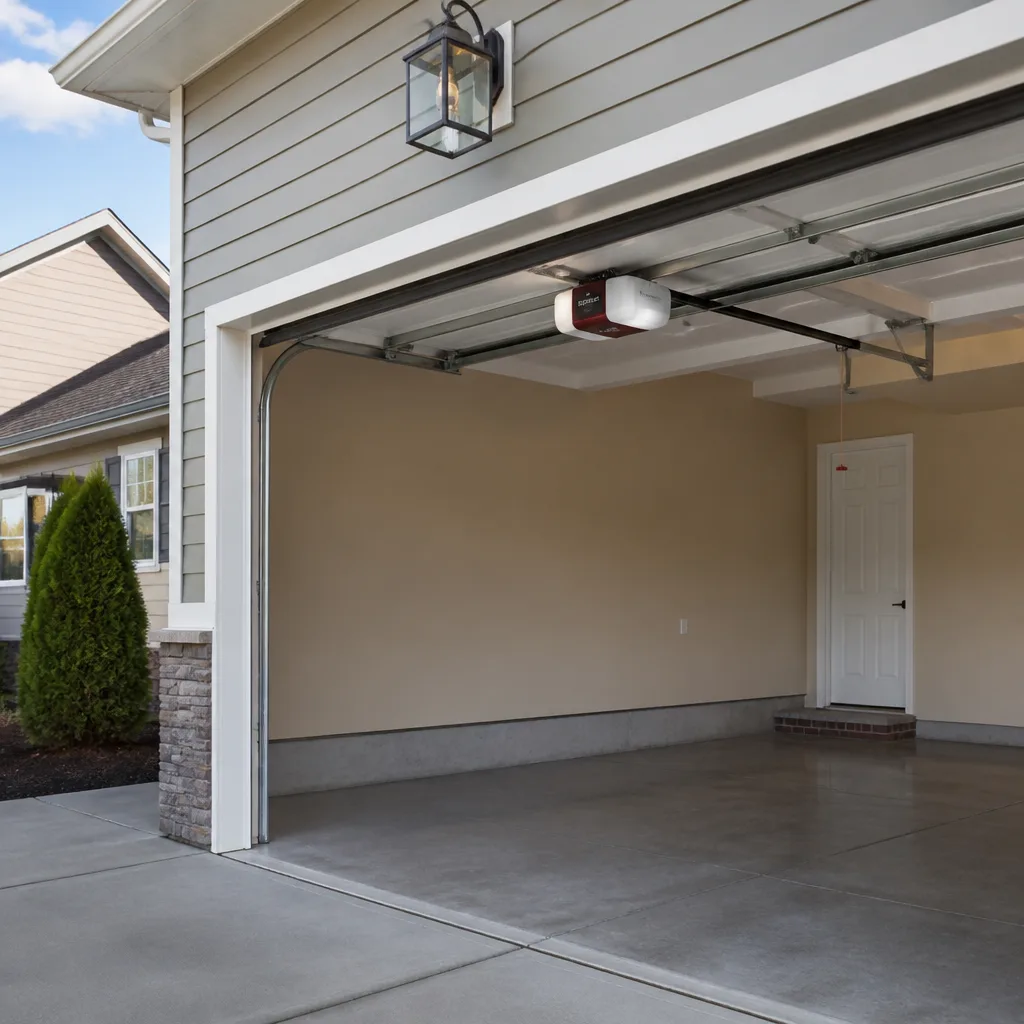 LiftMaster openers
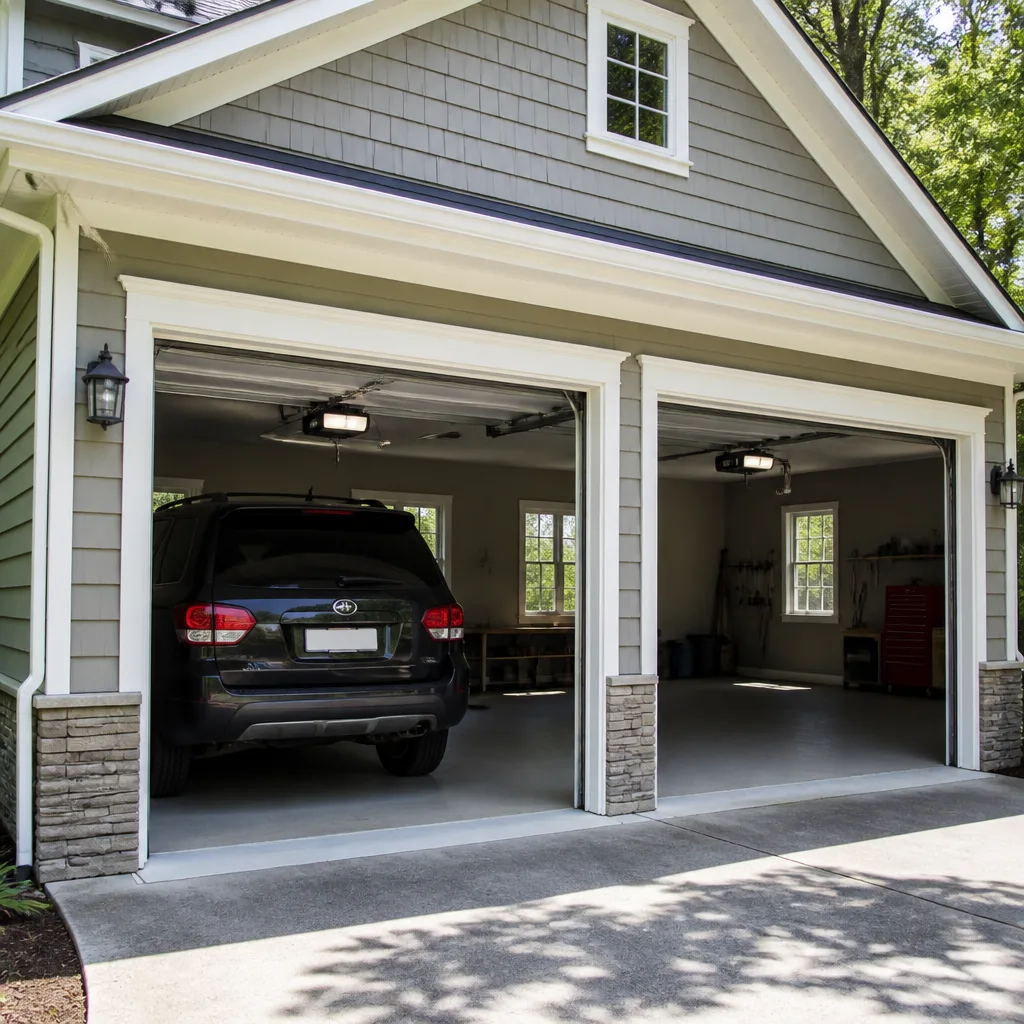 Chamberlain openers
Full 25-point door and opener safety check with every visit - springs, cables, rollers, tracks, and your LiftMaster or Chamberlain opener included
You get a price before we start. It does not change when the pro arrives.
Get your free estimateHow to Hire a Garage Door Contractor in Lawrence: A Step-by-Step Guide
In Massachusetts, a person can legally work on your garage door springs tomorrow with zero formal training. There’s no state licensing board that certifies garage door technicians, no exam that proves someone understands torsion spring torque, no database you can check. The question isn’t whether a contractor is “licensed” – it’s whether they can tell you, without hesitation, the difference between a standard-lift and a high-lift spring system. That gap between marketing polish and technical competency is where homeowners get hurt. This guide walks you through the specific questions, red flags, and verification steps that separate a real Lawrence garage door specialist from a generalist guessing at springs.
Quick Answer
To hire a garage door contractor in Lawrence, focus on technical competency rather than vague “licensed and insured” claims, since Massachusetts does not license garage door specialists. Ask pointed questions about spring types, verify the contractor’s specialization in garage doors alone rather than general handyman work, and insist on a written estimate before any work begins so the quoted price is the price you pay. A confident specialist answers technical questions directly; a generalist deflects with talk about “quality service.”
Styles & brands we work with
- Raised-panel steel
- Carriage house
- Modern flush
- Full-view glass
- LiftMaster openers
- Chamberlain openers
Table of Contents
- What Massachusetts Does and Doesn’t Require
- The Technical Questions to Ask Before Hiring
- How to Verify a Real Garage Door Specialist
- What a Proper Written Estimate Must Include
- Red Flags in Spring Quotes and Sizing
- Lawrence Weather and What It Does to Your Door
- Hiring for Multi-Unit Buildings
- What to Do When the Door Fails Today
What Does Massachusetts Actually Require for Garage Door Contractors?
Massachusetts does not issue a garage door technician license. There is no state exam, no certification class, and no governing body that tests someone’s knowledge of torsion springs, extension springs, or opener logic boards before they start charging for repairs. A general contractor’s license may apply to broader construction work, but it says nothing about whether a person can safely replace a high-tension spring. What this means for Lawrence homeowners is that “licensed and insured” claims deserve scrutiny, not blind trust. We can work with your insurer where relevant, but that’s separate from the skill question. The local pro you hire should be able to speak the trade language fluently. Ask what kind of springs are on your door and why the size matters. Ask how they’ll reset the opener’s travel limits after a repair. Someone who does garage door work every day will answer in seconds. Someone who does it occasionally will pivot to talking about reasonable rates and friendly service.
Massachusetts does require a permit for certain structural work, and if your repair involves modifying the door opening itself, it’s worth asking your city’s building department what’s required. For standard spring, opener, and door repairs, permits usually aren’t part of the picture, but confirming that with the city of Lawrence when you’re unsure is always the right move. What you should never do is confuse a vague “we’re fully licensed” statement for proof that the person knows garage doors. In a state where no such license exists, that phrase can only mean something else, or nothing at all.
The Technical Questions to Ask Before Hiring
These questions don’t require you to be a technician to ask them – they require the contractor to be one to answer them. The responses tell you almost everything about whether you’re talking to a specialist or a generalist. Ask them before you commit, and pay attention to whether answers are specific or vague.
- What type of spring does my door use, and why does it matter? A specialist will identify whether you have torsion springs (mounted on the header above the door) or extension springs (running along the sides). They’ll explain that torsion springs are measured by wire size and length, and that a mismatched spring affects balance, safety, and opener wear.
- How do you determine the correct spring size? The answer should involve door weight, drum size, and lift type – not just “we match what’s there.” Matching what’s there is a red flag if the previous spring was already wrong.
- Can you explain the difference between a standard-lift and a high-lift system? This is the litmus test. High-lift systems (used in taller garages) require different spring sizing and cable geometry. A confident answer means real system knowledge.
- What brand openers do you work on? A repair specialist should name specific platforms. We work on Chamberlain, Genie, LiftMaster, Craftsman, and others, including both legacy mechanical units and modern app-connected systems.
- How do you set the opener’s travel limits after a repair? The answer should mention the up and down limit switches and why they need adjusting after any spring or track change.
- Will you test the door’s balance after the repair? A specialist always does. A door should hold mid-travel on its own when balanced.
If the replies bounce between general promises and technical deflection – “we’ll take care of it, don’t worry” – you’re talking to someone who has probably replaced springs before but never sized them from a door’s actual weight and geometry. In Lawrence, that distinction matters, because the housing stock here includes older doors with non-standard track heights where sizing errors show up fast.
How to Verify a Real Garage Door Specialist
A garage door specialist should be able to talk about the door, the opener, and the spring system as one connected thing. If a contractor advertises plumbing, painting, and “handyman work” alongside garage door repair, their garage door depth is likely surface-level. Here’s how to tell the difference between a focused specialist and a “we do everything” operation.
- Ask what they don’t do. A specialist will tell you clearly that garage doors and openers are the entire scope. A generalist struggles to define their niche.
- Ask about brands. Real specialists work across the major manufacturers – Clopay, Amarr, Wayne Dalton, LiftMaster, Chamberlain, Genie, Craftsman, and Raynor are the most common residential names. Someone who has only ever worked on one brand has limited exposure.
- Ask about opener generations. Modern openers have Wi-Fi modules and app control, with logic boards and sync issues. Older openers have mechanical gear assemblies and limit switches. A specialist handles both. A generalist handles whichever they’ve seen most.
- Ask about the repair-versus-replace decision. A repair-focused contractor will diagnose first and recommend a targeted fix when one is possible. They won’t push a full door replacement when a single spring, cable, or roller is the actual problem.
- Ask what happens when the door is off-track. The answer should involve checking panels, hinges, and cables – not “we’ll just reattach it.”
In Lawrence, this last point comes up more than you might expect. Older garages in neighborhoods like the Prospect Hill area often have doors that have settled out of square, and reattaching a track without addressing the underlying geometry just delays the next failure. A specialist looks at the whole system. A generalist fixes the visible symptom.
What a Proper Written Estimate Must Include Before Work Starts
A verbal quote for spring work is a mistake, plain and simple. Springs are sized, matched, and rated, and the quote should reflect the actual parts being installed – not a verbal range that changes once the technician sees the door. The written estimate should specify exactly what will be done, what parts will be used, and what the final price is. In our experience, the estimate should include these items:
- A clear description of the repair scope. “Replace torsion spring” is not enough. The estimate should say which spring, what size, and whether cables or bearings are part of the job.
- Part specifications. Spring wire size, inside diameter, and length if applicable. A real estimate gives you the spec, not a generic “standard spring.”
- Labor and parts as separate lines, or one clearly stated total. Either format is fine, but the price should be stated plainly before work begins.
- Any additional charges spelled out in advance. If travel, disposal, or a required safety check includes an extra cost, that should be on the page, not added at the end.
- The final price, stated as firm. The written estimate sets the price. That’s the promise, and it should be on the paper.
For a matched pair of springs, the estimate should reflect two springs, not one. Torsion and extension springs are usually replaced in pairs, so a quote that only prices a single spring may be undersizing the job, or setting up a follow-up visit. Ask directly: “Is this for one spring or a pair?” The answer tells you whether the quote is honest about the job.
It also helps to know what the typical Lawrence repair ranges are. Spring replacement for a single torsion spring commonly runs $180 – $340, with a matched pair around double that range. Opener repair depends on the part – logic board, drive belt, or gear assembly – and is usually quoted after diagnosis. For the specific ranges and what’s included, the garage door spring repair page lays out each price line, and the garage door opener repair page covers the opener side. All prices are estimates and the written quote is the one that sets the final price.
Red Flags in Spring Quotes: Why a Suspiciously Low Price Is a Warning
A spring replacement quote that comes in far below the typical range is almost never a bargain. Springs are sized to specific wire diameters and lengths based on the door’s weight, drum size, and lift type – standard-lift versus high-lift changes the spring spec entirely. When a quote is unusually low, the most likely explanation is that the spring being installed is the wrong size, or is a lighter-rated spring that won’t hold the door’s cycle life. Watch for these red flags:
- A quote that doesn’t specify spring size. If the estimate says “spring replacement” without a wire size or spec, the contractor is likely going to install whatever fits, not what’s correct.
- A price that’s dramatically below the local range. In Lawrence, single torsion spring repair commonly runs $180 – $340. A quote significantly under that suggests either a mismatched spring or a different part being substituted.
- Verbal-only pricing for spring work. Springs are sized, not guessed. A verbal quote means the contractor hasn’t measured anything.
- A “we’ll see when we get there” price. That’s code for a quote that will change after the door is open.
- A generalist recommending a full door replacement alongside a spring failure. Spring failure alone doesn’t mean the door is bad. Repair first, replace only if the panels, tracks, or hardware have real damage.
- No explanation of why the spring broke. A specialist checks door balance and opener force settings after a spring replacement to understand whether an underlying issue caused the failure.
This last one is where a repair specialist adds real value. If the opener’s force setting is too high, or a cable is binding, the new spring will fail again sooner than it should. Diagnosing the cause is part of the job, not an extra.
How Lawrence Weather Affects Your Garage Door System
Lawrence sits in a climate with hard freeze-thaw cycles, damp winters, and hot, humid summers. That combination puts real stress on a garage door system. In summer, humidity swells wood door panels and can cause track misalignment as wood moves. In winter, ice can build in the track and the bottom seal, and metal contracts in the cold. Springs themselves don’t care much about temperature, but the cycle count they accumulate does. A door that’s been fighting a stiff track or dragging on a frozen seal all winter has been loading its springs harder than it should.
What this means for hiring a contractor in Lawrence is that whoever you choose should be thinking about the whole system, not just the part that broke. Ask whether they’ll check door balance, track alignment, and the bottom seal along with the repair. A specialist will. A generalist will fix the spring and leave.
There’s also a seasonal pattern worth knowing. Spring failures tend to cluster when temperatures swing hardest – the first cold snap and the first warm stretch. If your door is going to fail, that’s often when it happens. If you’ve been putting off a noisy door or a slow opener, the shift into a hard season is the time to get it looked at. For repair work specifically, the garage door repair page covers what’s involved for common failures, and our Lawrence Garage Door Repair Pros overview explains how the repair process is structured from the first call.
Hiring a Contractor for Multi-Unit Buildings in Lawrence
Property managers face a different hiring question than a single homeowner. In a multi-unit building with several garage systems, the contractor needs to handle consistency across units: same spring specs where the doors match, clear documentation of what was done in each unit, and a single point of contact for scheduling. Building owners in Lawrence often have a mix of older doors – some wood, some steel – and the contractor needs to know how to handle each one without turning a spring repair into a door replacement.
- Ask about documentation. A property manager needs a written record of which unit got which part, with specs.
- Ask about batching repairs. If multiple units need spring work, a specialist can often schedule and price them as one project, not separate emergency calls.
- Ask how they handle opener brands across units. A building with a mix of older Genie and newer Chamberlain openers needs a contractor comfortable with both platforms.
- Confirm the written estimate covers the full scope before anything starts. That protects the building owner and makes the job auditable.
For property managers, the key filter is the same as for a single homeowner: technical competency over marketing claims. A contractor who can talk spec on a Clopay door and a Wayne Dalton door in the same walkthrough is a specialist. One who can only talk about the brand they prefer is not.
What to Do When the Door Fails Today
When a spring snaps or an opener stops responding, the first call should be to a repair specialist, not a general contractor. A stuck door is a real disruption, and repair work can often be scheduled quickly. Here’s the process for a same-day call:
- Don’t force the door. A door with a broken spring is under uneven tension. Pulling on it manually can cause the door to fall or the cables to snap.
- Check the opener’s behavior. If the opener runs but the door doesn’t move, that’s often a broken spring or a disconnected drive. If the opener is silent, it may be a power or logic board issue.
- Call and describe the symptom. The technician can often tell from the description what’s likely wrong, which means the right parts are on the way.
- Ask for a written estimate before work starts. Even on same-day calls, the price should be quoted and agreed before any repair begins.
- Have the door’s brand and opener model ready. For openers, brand and model help identify logic boards and gear assemblies quickly. For doors, the brand (Clopay, Amarr, Chamberlain, Genie, and so on) helps with panel and hardware fit.
If the door is stuck open and the garage is exposed, that’s the most urgent case. Call and describe that specifically so scheduling reflects it. For more on how spring failures are diagnosed, the spring repair page goes into the process, and the opener repair page covers the opener side.
Common Mistakes to Avoid
- Treating “licensed and insured” as proof of garage door skill. Massachusetts doesn’t license garage door technicians, so that phrase can’t mean what homeowners assume. Ask technical questions instead.
- Accepting a verbal quote for spring work. Springs are sized, not guessed. A verbal quote means the contractor hasn’t measured the door, and the price can change once they do.
- Choosing the lowest spring quote without checking the spec. A low price usually means a mismatched spring that will wear faster and may not hold the door safely.
- Letting a generalist replace one spring when both should be swapped. Matched pairs are usually replaced together because they wear at similar rates. A single-spring job on a matched pair can be a false economy.
- Skipping the balance and force-setting check. After a spring repair, the opener’s force limits and door balance should be checked. Skipping that step shortens the life of the new spring.
- Jumping to full door replacement when a repair will do. Spring, opener, and track failures are repairable. Replacement should be a last resort, not the default.
- Not asking about the door’s brand or opener model before the call. Knowing the brand – whether it’s a Clopay door or a Chamberlain opener – helps the technician arrive prepared and reduces return visits.
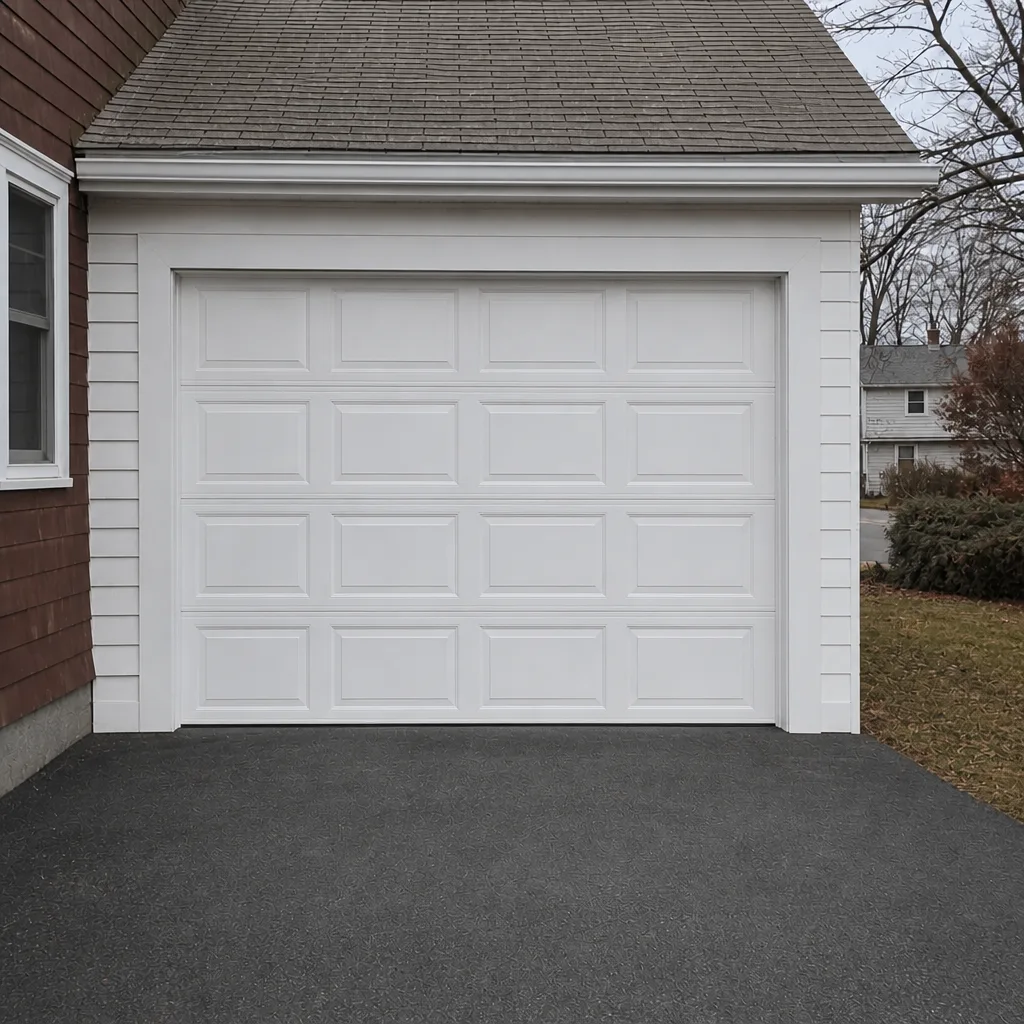
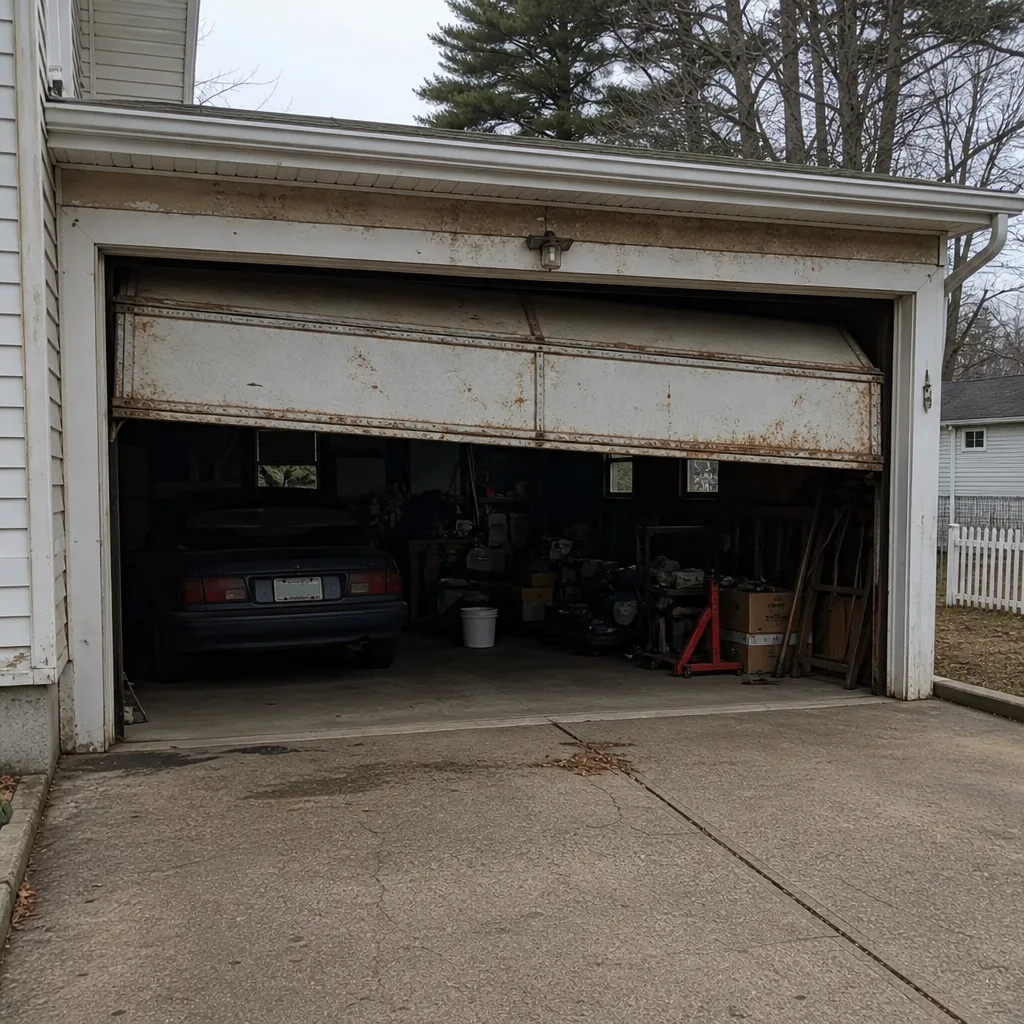
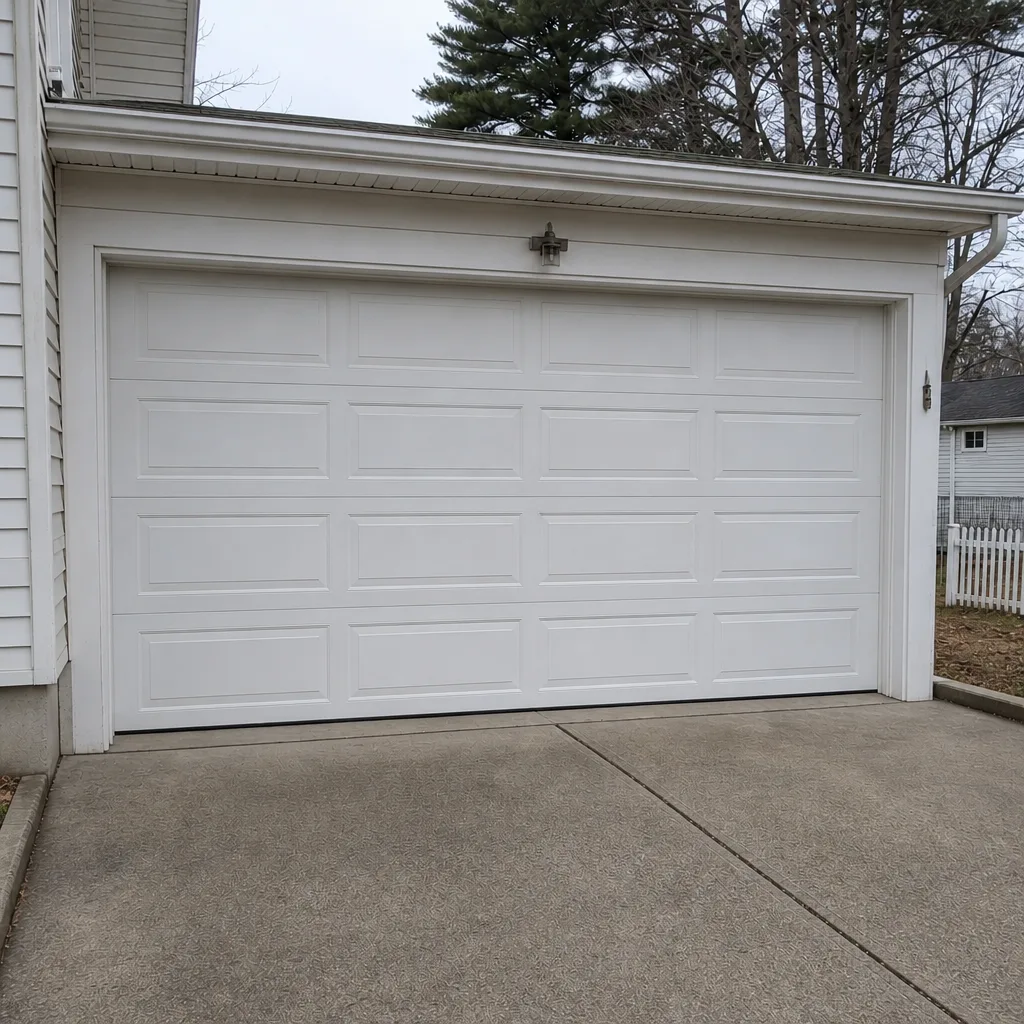
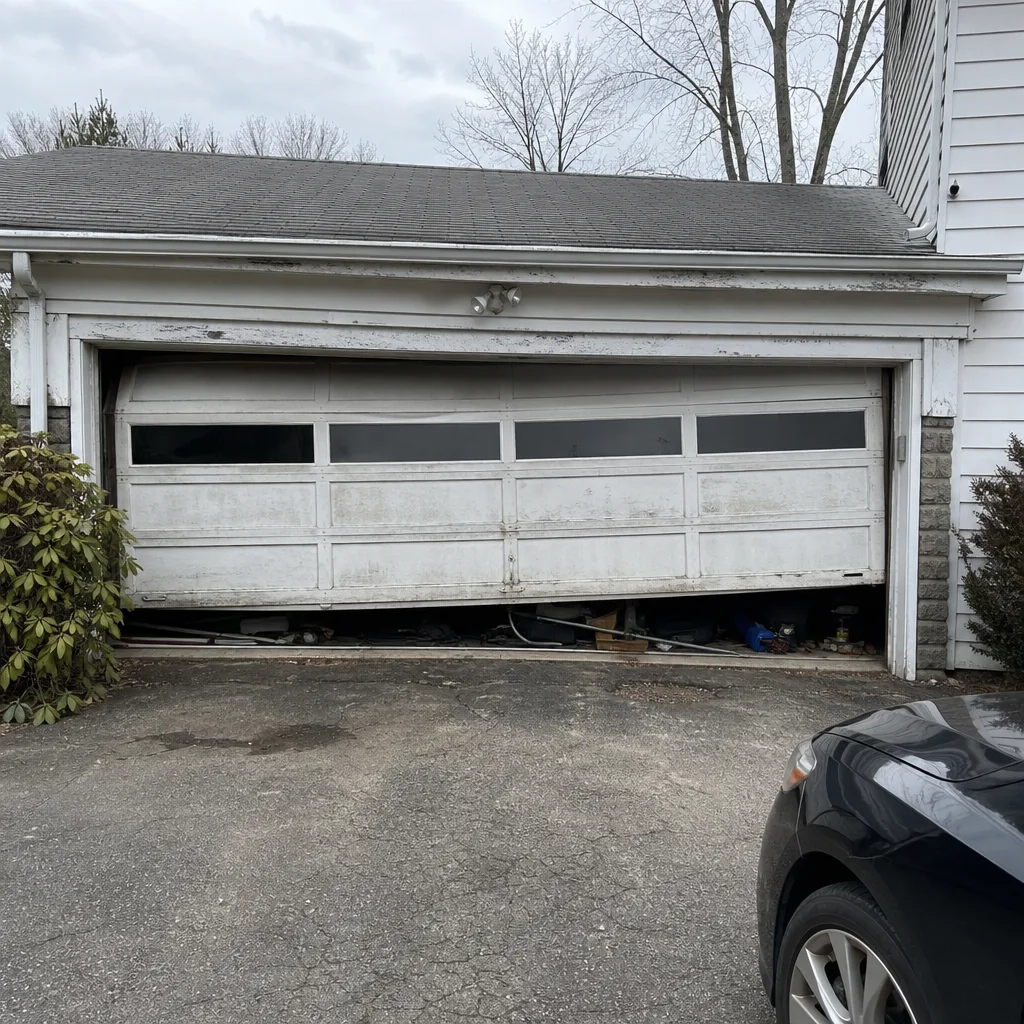
See the difference
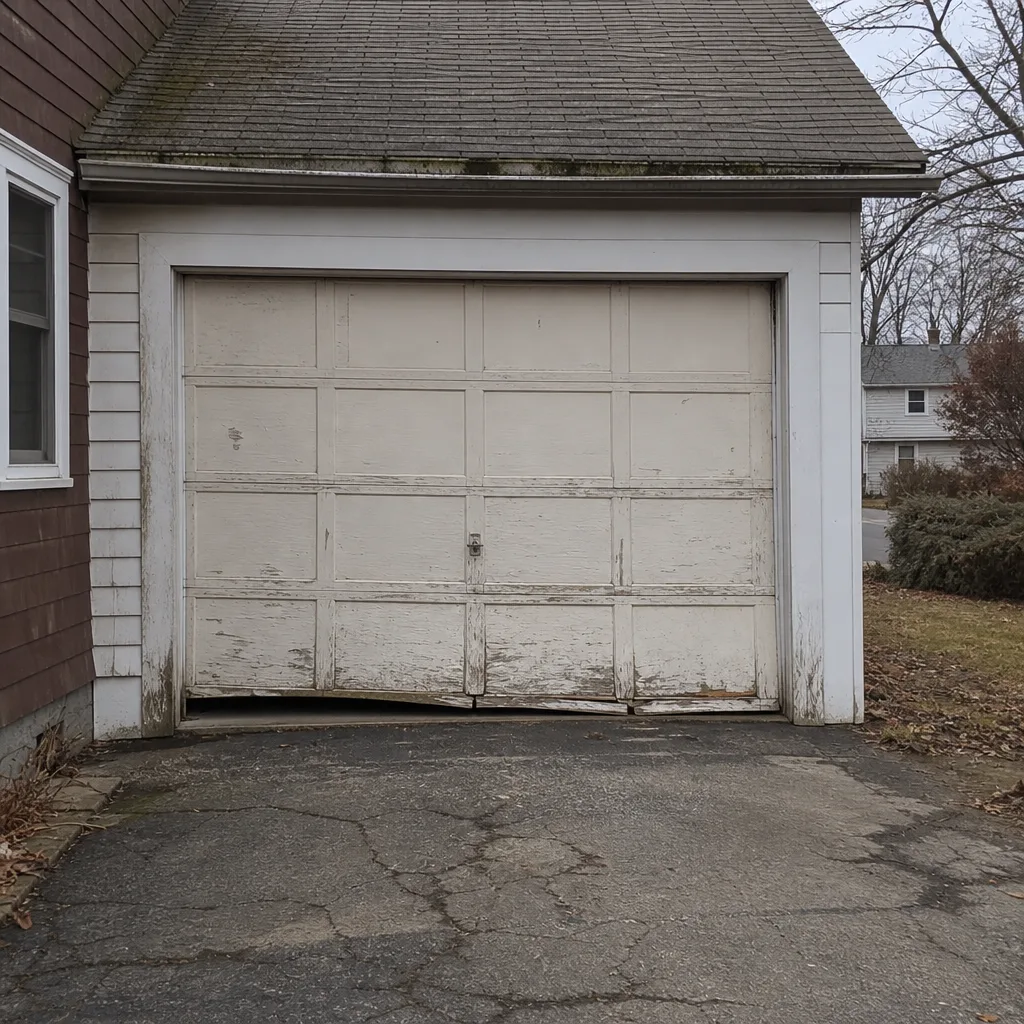 Before
 After
 Before
 After
 Before
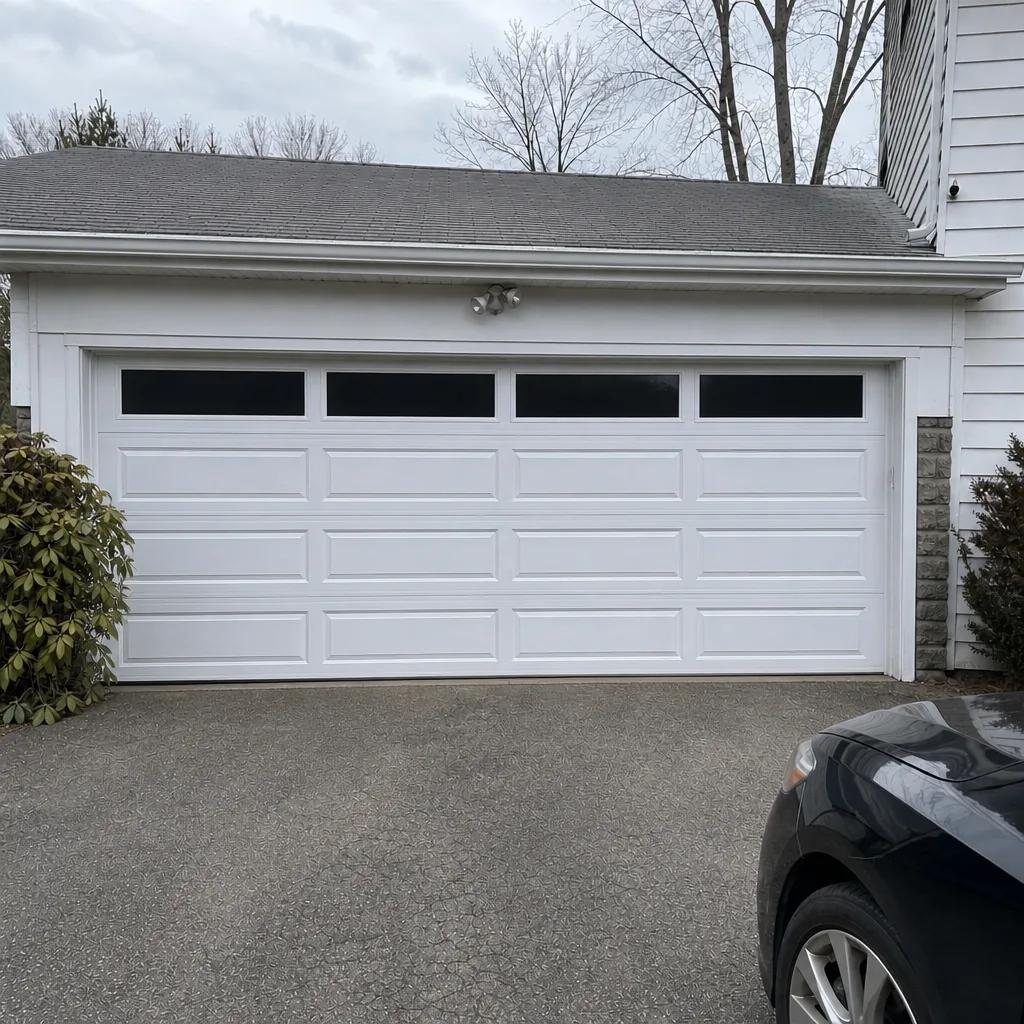 After
When to Call a Professional
Springs, cables, and torsion systems are under serious tension. A torsion spring can store enough energy to cause real injury, and the process of adjusting one requires specific tools and training – winding bars, not sockets or screwdrivers. If your door has a broken spring, a snapped cable, or a door that’s off-track, don’t attempt the repair yourself. Call a trained professional. The same goes for anything involving the opener’s electrical connections or the logic board. For Lawrence homeowners, calling us early saves time and prevents secondary damage. Lawrence Garage Door Repair Pros offers free estimates in Lawrence – call (855) 761-3321. We work on the brands you already own, including Chamberlain, Genie, Clopay, and Amarr, and we recommend repair before replacement. Our technicians have up to 10 years of experience with torsion and extension systems, openers, and track work.
Frequently Asked Questions
Massachusetts does not license garage door technicians, so there is no state license to verify. Instead, confirm the contractor specializes in garage doors and can answer specific technical questions about spring types, opener models, and door balance. Ask how they size a spring and how they’ll reset travel limits after the repair. A real specialist answers directly; a generalist deflects. Call (855) 761-3321 for an exact quote – estimates are free.
Single torsion spring replacement typically runs $180 – $340 in the Lawrence area, and a matched pair is usually about double that because both springs are replaced together. The written estimate sets the final price, so ask for it in writing before work starts. Call (855) 761-3321 for an exact quote – estimates are free.
Repair calls can often be scheduled quickly, and same-day service is available for many situations. When you call, describe the symptom – a silent opener, a door that won’t lift, or a snapped spring – so the technician can diagnose and arrive prepared. Call (855) 761-3321 and tell us what the door is doing.
No. We quote and agree on the price before any work starts, and the written estimate sets the final price. If the diagnosis reveals a different part is needed, we’ll tell you before proceeding rather than after. Call (855) 761-3321 for an exact quote – estimates are free.
Massachusetts does not issue a garage door technician license, so the better question is whether the technicians are experienced with your specific door and opener. Our technicians have up to 10 years of experience with torsion and extension springs, opener logic boards, and track and cable work. Call (855) 761-3321 to discuss your repair.
Repair the spring, unless the door panels, tracks, or hardware have separate damage. A spring failure alone is a repair, not a reason to replace the door. A specialist will diagnose the cause of the failure and recommend the targeted fix. Call (855) 761-3321 and we’ll walk through what the door needs.
The Bottom Line
Hiring a garage door contractor in Lawrence comes down to technical competency, not marketing polish. Ask what spring your door uses and why the size matters. Ask how the contractor will set travel limits and check balance after the repair. Ask for a written estimate before any work starts, and be wary of a spring quote that sits well below the typical range. Massachusetts doesn’t license garage door technicians, so your filter is the contractor’s ability to speak the trade language clearly. Repair-focused specialists work on the brands you already own – Chamberlain, Genie, Clopay, Amarr, and more – and recommend a targeted fix before a full replacement. That’s the standard to hold.
If you’re ready to schedule a repair or get a written estimate, call Lawrence Garage Door Repair Pros at (855) 761-3321. We offer free estimates in Lawrence and work on the door and opener brands already in your garage.
Written by the team at Lawrence Garage Door Repair Pros.