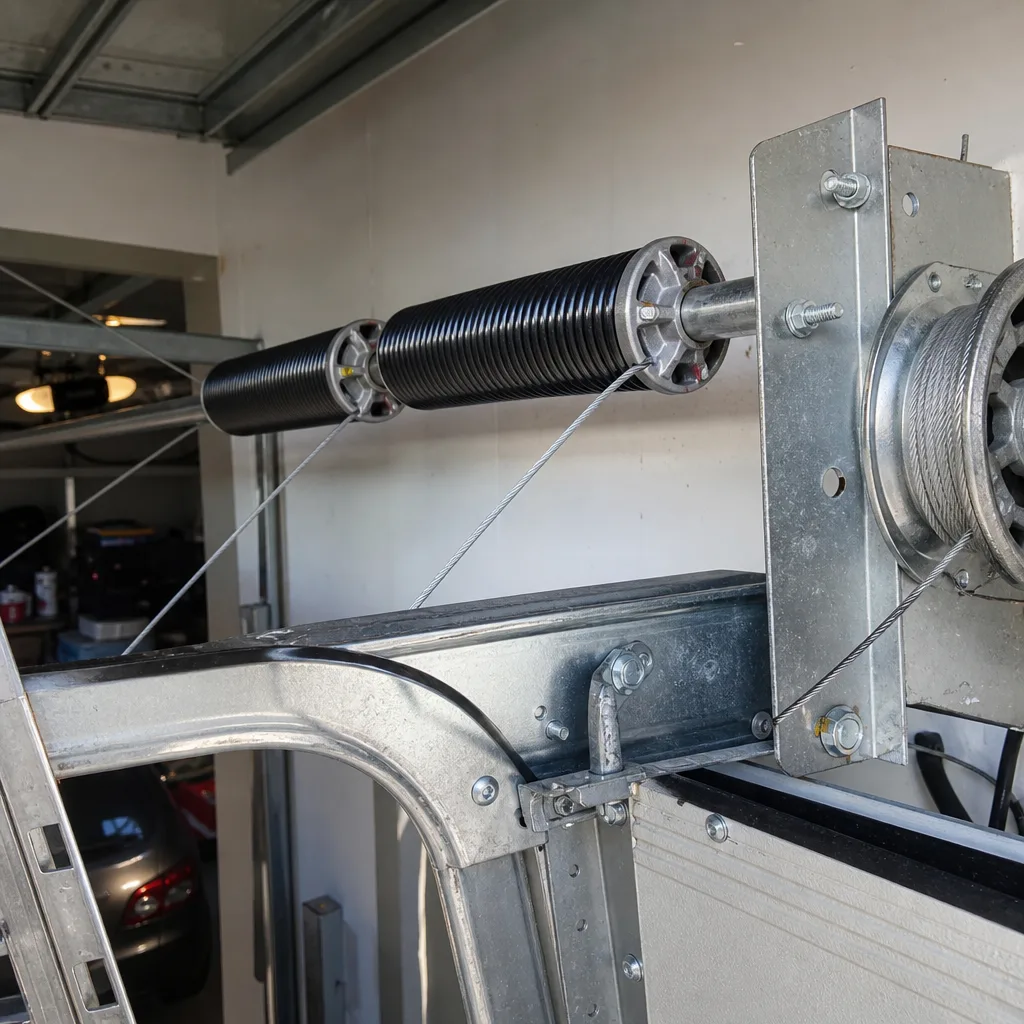
Last updated November 20, 2026
 Raised-panel steel
 Carriage house
 Modern flush
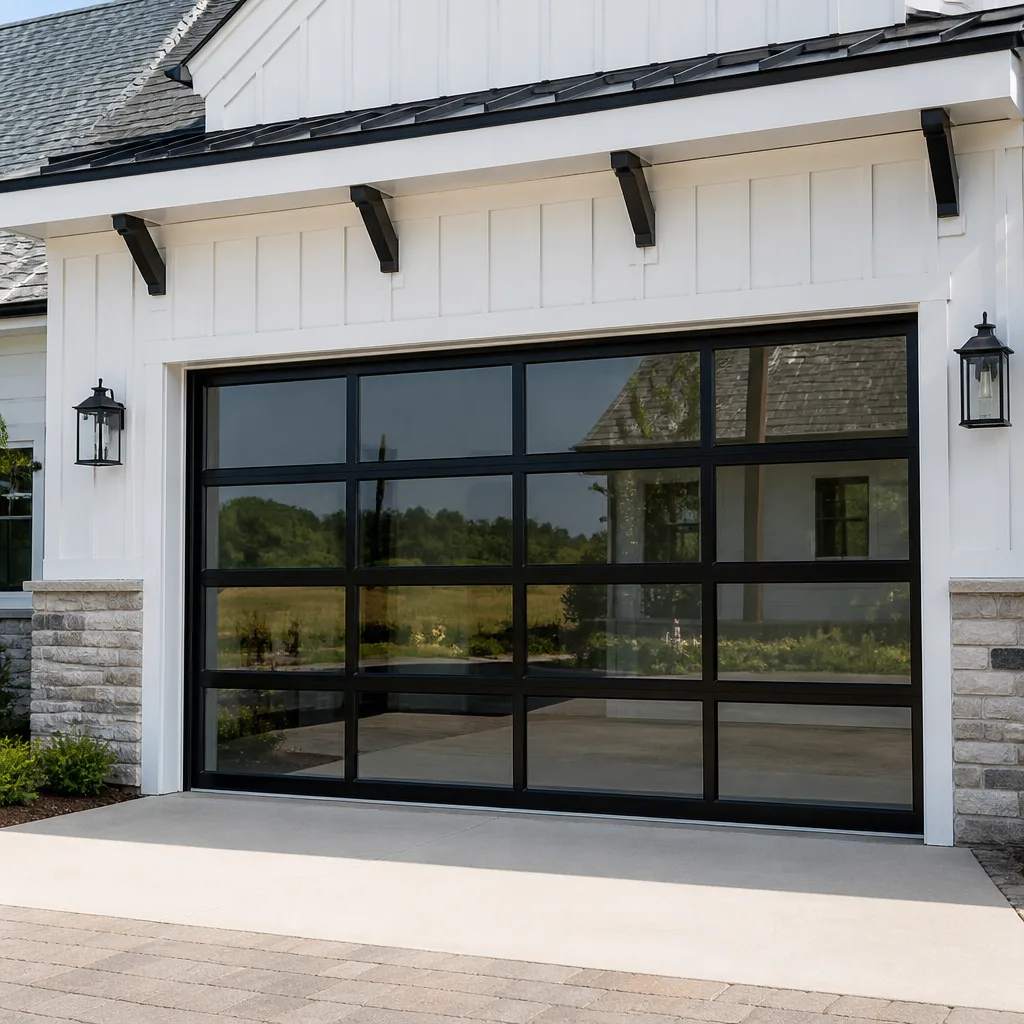 Full-view glass
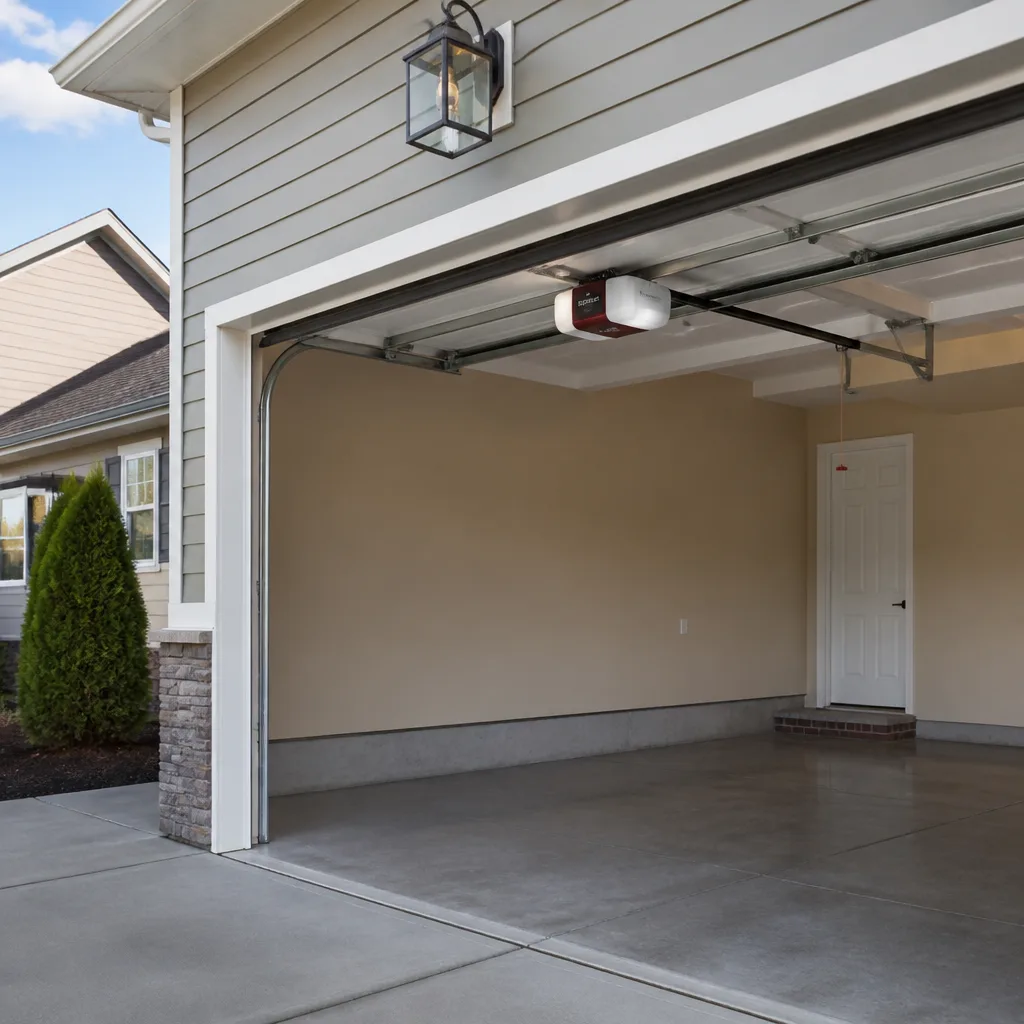 LiftMaster openers
 Chamberlain openers
Full 25-point door and opener safety check with every visit - springs, cables, rollers, tracks, and your LiftMaster or Chamberlain opener included
You get a price before we start. It does not change when the pro arrives.
Get your free estimateGarage Door Warning Signs: A Lawrence Homeowner’s Reference Guide
When a garage door starts reversing before it hits the ground, that’s not a sensitivity glitch. It’s a specific message from the opener’s force sensor that the door’s mechanical resistance has changed. The question is why. That answer determines whether you’re looking at a small adjustment or a full spring replacement, and the two are worlds apart in both cost and urgency. Most homeowners in Lawrence mistake these signals for normal quirks until the door quits entirely on a morning they can’t afford to lose. This guide maps the eight most common warning signs to their probable root causes so you can stop guessing and start planning. We’ll cover the sounds, the visual clues, and the 48-hour window that separates “schedule it” from “stop using the door.”
Quick Answer
A garage door that reverses early, jerks, squeals, grinds, or opens unevenly is signaling a specific mechanical problem, usually worn springs, a failing opener, or a misaligned track. The most urgent signs are a snapped spring, a door that hangs crooked, or an opener that works only sometimes, all of which point to an imminent failure. Catching these warnings early in Lawrence usually means a smaller repair instead of an emergency call.
Styles & brands we work with
- Raised-panel steel
- Carriage house
- Modern flush
- Full-view glass
- LiftMaster openers
- Chamberlain openers
Table of Contents
- The 8 Warning Signs Mapped to Their Root Causes
- What the Sounds Tell You: Grinding vs. Popping vs. Squealing
- Spotting Spring Fatigue Without Touching Anything
- Why an Intermittent Opener Is Often More Urgent Than a Dead One
- The 48-Hour Window: Imminent Failure vs. Schedule-It Signs
- Lawrence Weather, Housing, and Your Door
- Common Mistakes to Avoid
- When to Call a Professional
The 8 Warning Signs Mapped to Their Root Causes
Most homeowners describe a symptom and assume it could be “several things.” In practice, each symptom points to a most-likely culprit. Here’s the mapping we use when we diagnose doors across Lawrence.
- Door reverses before hitting the floor. The opener’s force sensor is detecting resistance. The most probable root cause is a torsion or extension spring that has lost tension, making the door too heavy for the opener to close against.
- Door opens a foot and stops. Usually a travel-limit setting that has drifted, or a logic board problem in the opener. On LiftMaster and Chamberlain units this is often a limit switch issue rather than a motor failure.
- Loud bang from the garage. Nine times out of ten, a torsion spring has snapped. The door may still be closed, but the counterbalance is gone and the opener is now lifting dead weight.
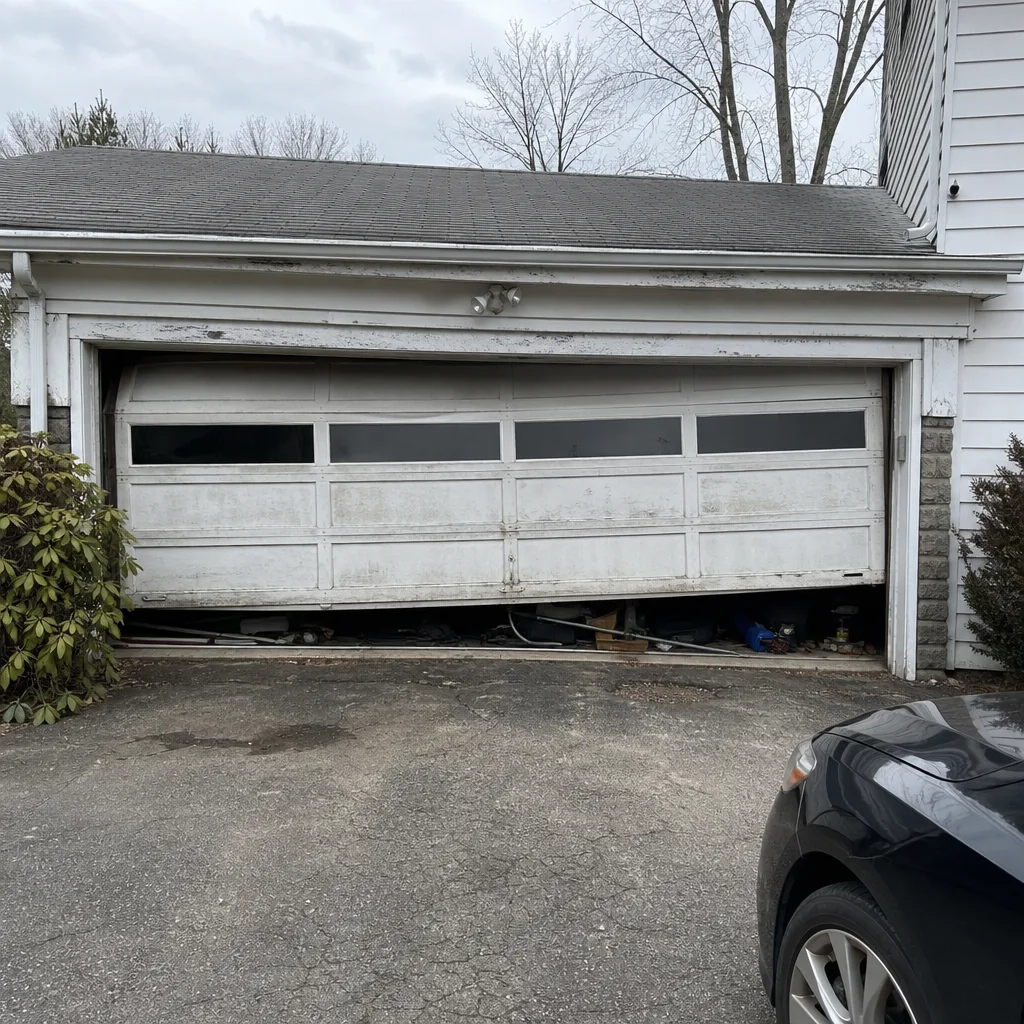
- Door hangs crooked or one side lags. A broken spring on one side of a two-spring system, or a snapped extension spring. Never run the opener when you see this.
- Grinding or scraping as it moves. Rollers that have worn flat, or a track that’s bent and rubbing the door’s edge.
- Door shakes and rattles hard. Loose hinges, worn rollers, or a door that’s come out of alignment with its track.
- Opener runs but door doesn’t move. A stripped drive gear, a broken drive belt, or a snapped torsion spring the opener can’t lift.
- Remote or wall button works only sometimes. A failing logic board, weak batteries, or interference. The intermittent pattern is the clue.
That last point matters more than people realize. A door that works “most days” is telling you a component is on its way out, and the timing is unpredictable. A door that stops working entirely at least is honest about it. We’ll come back to that in a section of its own.
If your symptom lands in this list and you’d rather not wait, our garage door repair service covers the full range of these failures, from a bent track to a dead logic board.
What the Sounds Tell You: Grinding vs. Popping vs. Squealing
The noise your door makes is a diagnostic tool. Different sounds point to different components, and knowing the difference helps you describe the problem accurately when you call.
- Grinding: Metal-on-metal contact. Usually worn rollers with flat spots, or a track that has bent and is scraping the door’s edge. If the grinding comes from the opener itself, the drive gear may be stripping.
- Popping: A sharp pop, often followed by the door sagging or not opening. This is almost always a spring breaking. Torsion springs on Clopay and Amarr doors in particular give a loud report when they snap. Stop using the door immediately.
- Squealing: High-pitched and continuous. Usually dry torsion springs, dry rollers, or a hinge that needs lubrication. Squealing is the least urgent of the three, but it accelerates wear if ignored.
- Rattling: Loose hardware. Hinges, brackets, or the door’s panel fasteners working themselves free over time.
- Clicking then nothing: The opener’s logic board is engaging but the motor isn’t turning. On Craftsman and Genie units this often means a failed capacitor or a blown logic board.
Notice that squealing is the only sound on this list that gives you real time. Grinding and popping are both signals that something is already failing. If you hear a pop followed by silence when you press the button, the spring has likely broken and the opener is trying to lift a door that’s become far too heavy. Shut it down and call.
Sound is often the first clue, but it’s not the only one. The other reliable indicator is visual, and you can read it from the ground without touching anything.
Spotting Spring Fatigue Without Touching Anything
Springs don’t usually snap without warning. They fatigue first, and fatigue leaves visible traces. You can spot them from the floor of your garage without getting near the spring itself, which matters because torsion springs are under extreme tension and are genuinely dangerous to touch.
Here’s what to look for:
- A visible gap in the coil. On a torsion spring mounted above the door, a clean break shows as a gap in the tightly wound coil. If you see daylight through the spring, it’s broken.
- Stretched extension springs. On doors with extension springs along the sides, a spring that looks longer than its twin, or that hangs slack, has lost tension.
- Rust streaks or discoloration. Springs showing corrosion are closer to failure than clean ones. Lawrence’s wet winters and humid summers are hard on steel that lives in an unheated garage.
- The door feels heavy when you lift it manually. A properly balanced door lifts with one hand and stays where you put it. If it feels like dead weight, the springs aren’t doing their job.
- The door won’t stay open at the halfway point. It drifts down. That’s a balance problem, and the springs are the usual cause.
What you shouldn’t do is try to adjust, wind, or replace the spring yourself. Torsion springs store enough energy to cause serious injury, and the tools required to wind them safely aren’t in most homeowners’ garages. That’s why spring work is a job for trained hands. Our garage door spring repair is a core service for exactly this reason.
On a two-spring system, one spring failing means the other is usually close behind. A matched pair is generally replaced together, so plan for that when you’re thinking about cost. One spring is one spring; a pair is two.
Why an Intermittent Opener Is Often More Urgent Than a Dead One
This one surprises people. A door that won’t open at all is obvious. A door that opens four times out of five is a loaded gun. Here’s why.
An intermittent opener usually means a component is failing but hasn’t failed yet. The most common pattern is the logic board, which on modern LiftMaster and Chamberlain units handles the signal from the remote, the safety sensors, and the motor commands. When it starts to go, it works, then doesn’t, then works again. The timing is unpredictable. The door might refuse to close on a morning you’re already late, or it might refuse to open when you need to leave.
The pattern to watch for:
- Works from the wall button but not the remote, or the reverse.
- Works from close range but not from the driveway.
- Works for a few presses, then stops responding for a minute.
- Works in cool weather, fails when the garage heats up in summer.
Any of those point to a failing logic board or a weak signal path rather than a dead motor. We repair openers across the leading platforms, and the fix is often a board or a sensor swap rather than a full replacement. We cover that in more detail on our garage door opener repair page.
What none of these signs tell you is how much time you have. That’s where the 48-hour window comes in.
The 48-Hour Window: Imminent Failure vs. Schedule-It Signs
Some warning signs mean stop using the door now. Others mean call this week. Knowing the difference keeps you out of an emergency you could have avoided.
Treat as imminent failure:
- A pop followed by the door not opening. The spring has broken.
- The door hangs crooked or sags on one side. A spring has failed and the opener is now lifting dead weight.
- The door comes off its track. Any use risks further damage and is dangerous.
- Grinding or scraping that’s getting worse daily. The track or rollers are failing.
Schedule within the week:
- Squealing and rattling that hasn’t gotten worse.
- An intermittent opener that still works most of the time.
- A door that reverses occasionally but not consistently.
- Visible rust on springs without a gap.
We say the imminent-failure list is a 48-hour window because, in our experience, the door that’s sagging on one side or grinding harder every day is usually a spring or track failure waiting to finish itself off. A door in that state in Lawrence can go from “opens slowly” to “won’t open” inside a week. If you’re on the schedule-it list, book it before it becomes an emergency. If you’re on the imminent list, stop using the door and call.
Lawrence Weather, Housing, and Your Door
A garage door in Lawrence lives a harder life than a door in a milder climate, and that shows up in the warning signs you’re most likely to see.
Lawrence winters bring freeze-thaw cycles that work on every metal component in the door. Lubricant dries out faster, rollers seize, and springs cycle through contraction and expansion that accelerates fatigue. Summer humidity adds another layer, corroding bare steel and swelling wooden components on older doors. A spring that’s been quietly fatiguing for a season will often choose the coldest week to snap.
The housing stock matters too. Lawrence has a lot of older multi-family buildings, and property managers responsible for several units see the same warning signs repeating across doors of the same age and brand. If you manage a building and one door is grinding, check the others. They were likely installed at the same time and are likely aging on the same curve.
Brand matters at the diagnostic stage. A Wayne Dalton door has different spring geometry than an Amarr, and a Craftsman opener has different logic board behavior than a Genie. We work on all eight of the major residential brands, so we’re not guessing at what’s inside your garage. Whether the door is a Clopay or a Raynor, we see the same patterns play out, and we know what the warning sign usually means for that specific system.
Common Mistakes to Avoid
- Running the opener after a loud pop. If you heard a bang and the door won’t open, the spring has broken. Pressing the button again forces the opener to lift a door it was never designed to lift without spring help, and it can strip the drive gear or burn out the motor.
- Treating a reversing door as a sensor problem only. Cleaning the safety sensors is the first thing to try, but if the door still reverses, the force sensor is reporting real resistance. That means a spring or track issue, not a sensor issue.
- Lubricating a failing spring instead of replacing it. Lubrication quiets a squeak. It doesn’t restore lost tension. A fatigued spring still needs replacement, and greasing it just hides the warning.
- Adjusting the opener’s force setting to force a heavy door closed. Cranking up the force limit is how people turn a spring problem into a stripped drive gear. The door’s resistance is the message; overriding it doesn’t fix anything.
- Ignoring one side of a two-spring system. If one spring has failed, the other has cycled the same number of times. Replacing one and leaving the other usually means a second call within months.
- Assuming a new door is the fix. Most warning signs in Lawrence are repairable on the existing door. A specialist diagnoses first. Replacement is the answer only when the door’s panels or structure are beyond repair, not as a default.
- Putting off an intermittent opener because it “still works.” The pattern is the warning. An opener that works four times out of five will eventually work zero times out of five, and you won’t pick the day.
When to Call a Professional
Call a professional the moment you see a door that’s off its track, sagging on one side, refusing to open after a pop, or hanging crooked. Those are the signs that can turn dangerous if the door is used. Call the same week for a door that grinds, squeals, reverses inconsistently, or has an opener that works only sometimes. And call before you touch a torsion spring. The spring system is the one part of a garage door that carries enough stored energy to hurt you, and it’s exactly the part most warning signs point to.
Lawrence Garage Door Repair Pros offers free estimates in Lawrence. Our technicians have up to 10 years of experience across the major residential brands, and we focus on repair first. Call (855) 761-3321 to book a diagnosis.
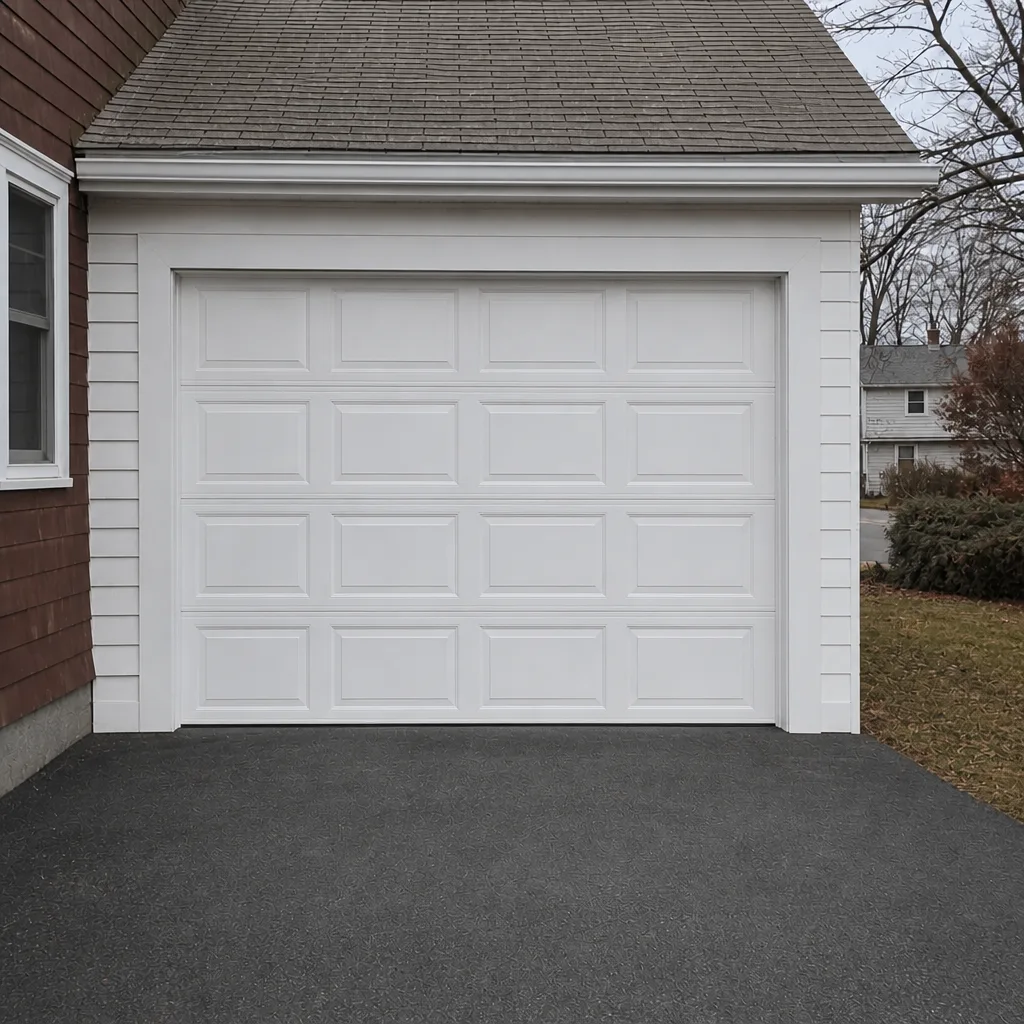
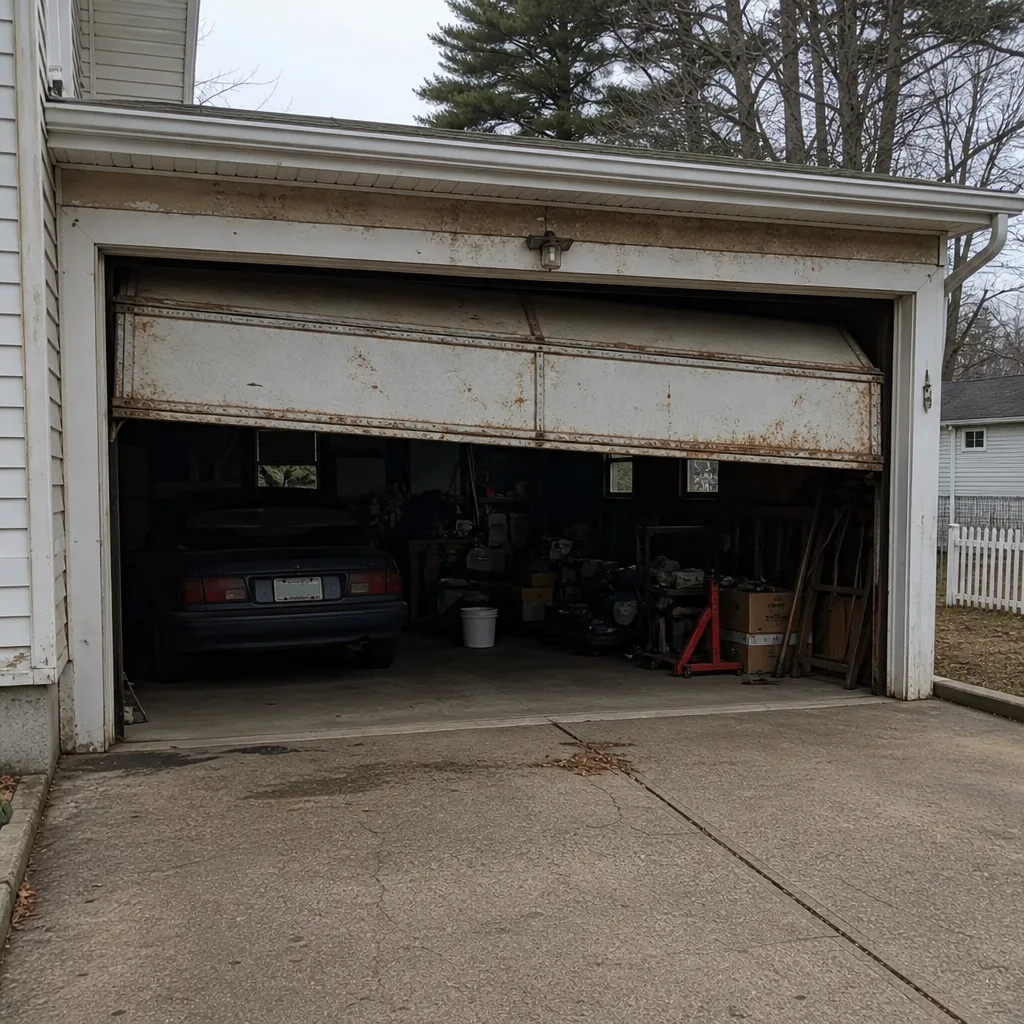
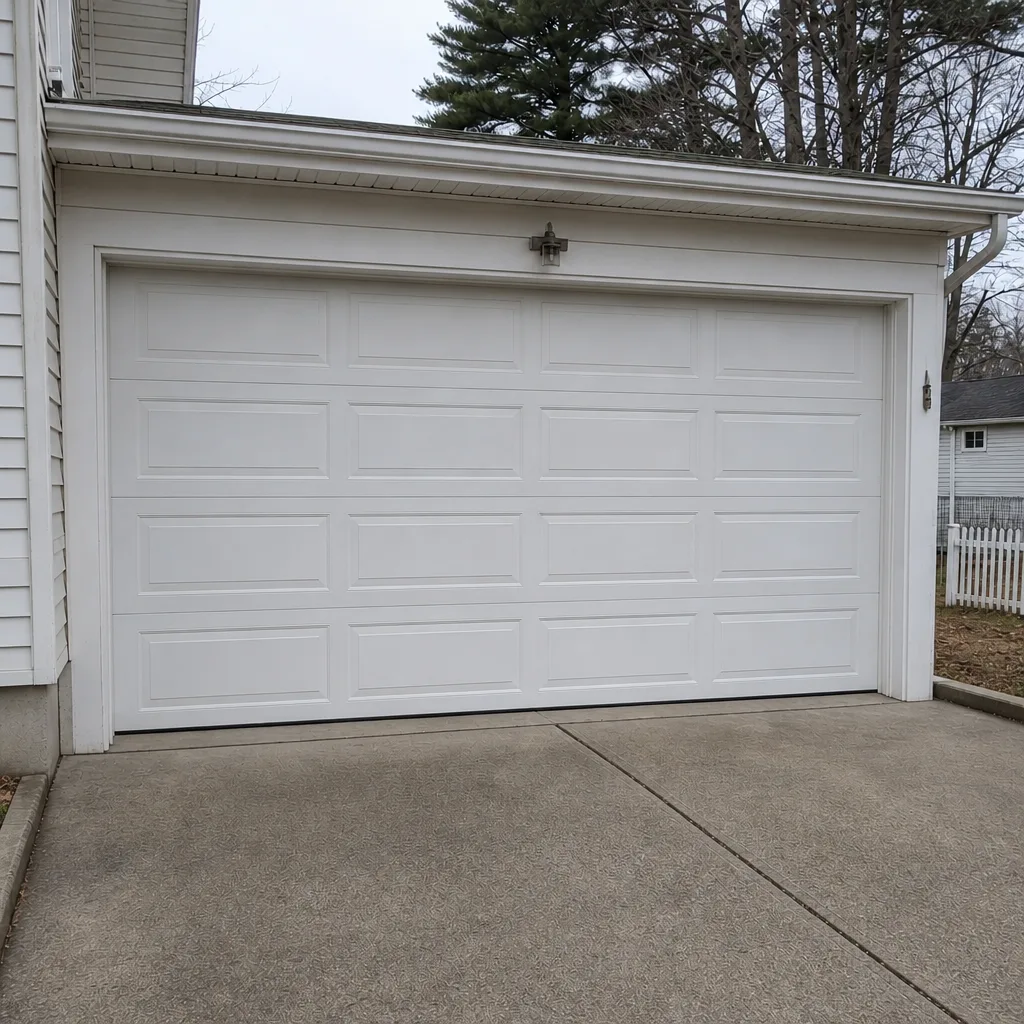
See the difference
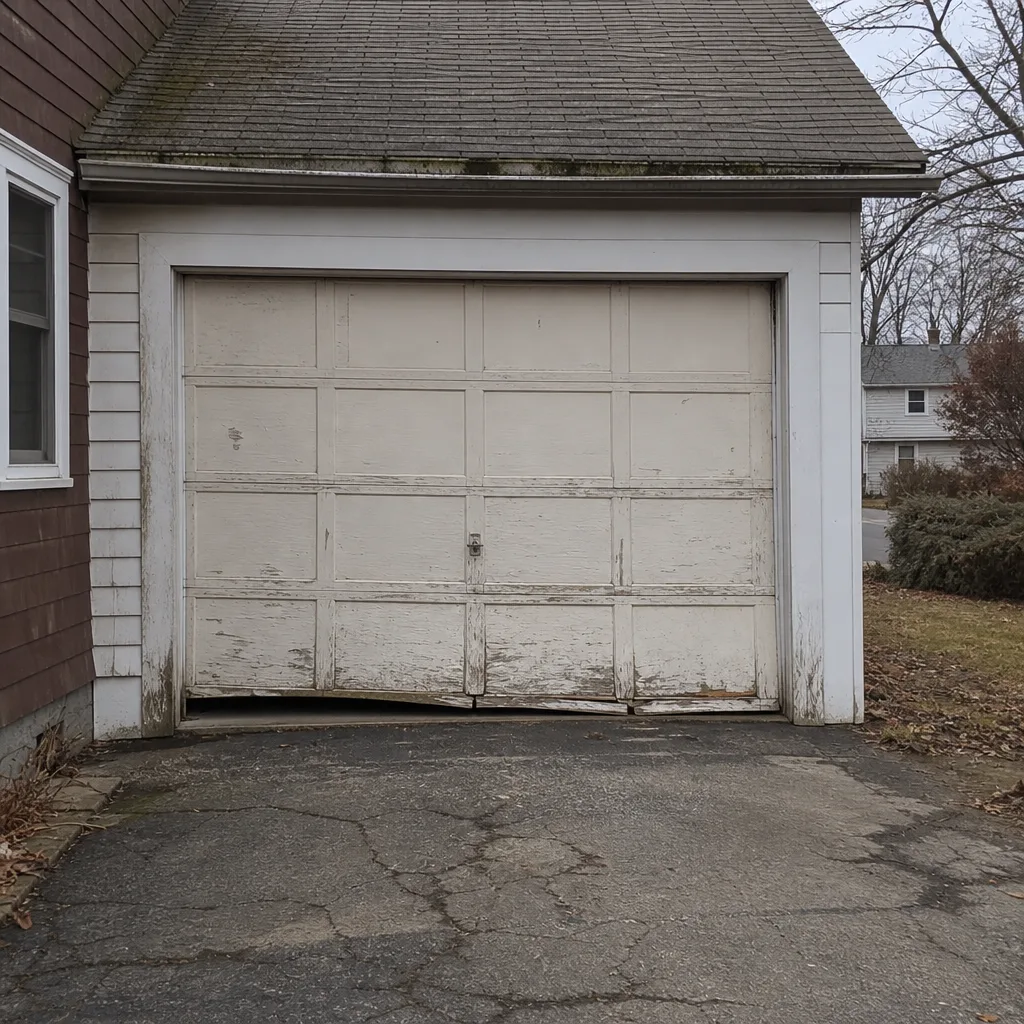 Before
 After
 Before
 After
 Before
 After
Frequently Asked Questions
The first sign is usually a change in sound or motion: a door that hesitates, reverses before hitting the floor, or starts squealing or grinding. These early changes often point to spring fatigue or worn rollers before anything actually breaks. Catching them at this stage usually means a smaller repair.
Look for a visible gap in the torsion spring coil, rust streaks on the spring, a door that feels heavy when lifted manually, or a door that drifts down instead of staying open at the halfway point. Those signs mean the spring has lost tension and is close to failing. Don’t touch the spring yourself. Call a professional to assess it.
You can open and close it manually, but stop running the opener until you’ve had it looked at. A reversing door means the force sensor is detecting resistance, which usually points to a spring or track problem. Continued opener use risks stripping the drive gear. Call (855) 761-3321 for a diagnosis.
An intermittent opener usually means a failing logic board, a weak remote battery, or a sensor issue rather than a dead motor. The pattern matters: if it works from the wall button but not the remote, or works cold but not warm, that points to the board. It’s often repairable without replacing the whole unit.
The local professionals we connect you with are licensed and insured as their state requires. They’re experienced with the major residential brands, including Clopay, Amarr, Wayne Dalton, and Craftsman. Call (855) 761-3321 for details on the pro assigned to your job.
No. Most warning signs point to a targeted fix rather than a replacement. A squealing door is often a lubrication and roller issue. An intermittent opener is often a logic board swap. Only a door with structural damage or a full spring failure on a two-spring system tends to be the larger repair.
The Bottom Line
Your garage door is talking to you. Most of what it says falls into one of eight patterns, and each pattern points to a specific root cause. Reversing doors point to spring problems. Grinding points to rollers or track. A pop means a spring is gone. An intermittent opener means a component is failing. Sort your symptom into the imminent-failure list or the schedule-it list, and act on it before the deadline. Repair first, diagnose before replacing, and never touch a torsion spring. To get a real diagnosis, call (855) 761-3321 for a free estimate in Lawrence.
Written by the team at Lawrence Garage Door Repair Pros.